Safeguarding Policy
North Shields Fishermen’s Heritage Project
Safeguarding Policy for Protecting Children and Young People at possible risk of abuse
Arrangement of sections:
- Safeguarding Strategy & Policy overview
- Legal framework
- Implementation of Safeguarding Strategy
- Designated Safeguarding Officer (DSO) & their role
- Safeguarding Policy & Procedure for Protecting Children and Young People at possible Risk of Abuse
- Useful contacts
- Document details
Appendix 1: Record of Concern Form – Template
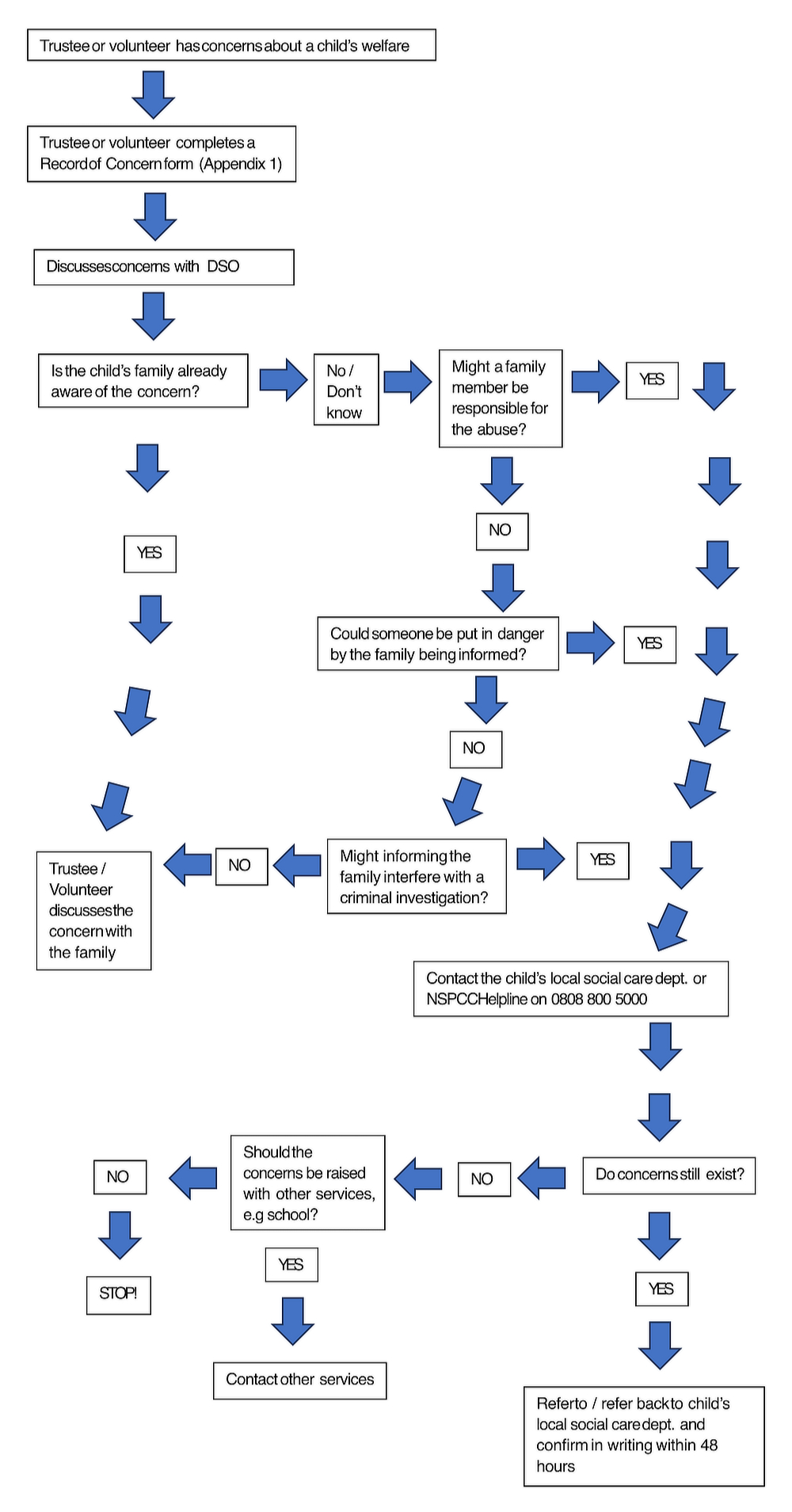
Appendix 2: Reporting Child Concerns – Flowchart
1 Safeguarding Strategy and Policy Overview
This strategy and policy applies to all trustees and volunteers of NSFHP. The purpose of our strategy and policy is:
- To protect children and young people who NSFHP work with in any way
- To provide all trustees and volunteers with the overarching principles that guide our approach to safeguarding and child protection. We believe that a child or young person should never experience abuse of any kind. We have a responsibility to promote the welfare of all children and young people and to keep them safe. We are committed to operate in a way that protects them
2 Legal framework
This policy has been drawn up on the basis of law and guidance that seeks to protect children, namely:
- Children Act 1989
- United Convention of the Rights of the Child 1991
- Data Protection Act 1998(Act replaced with Data Protection Act 2018)
- Human Rights Act 1998
- Sexual offences Act 2003
- Children Act 2004
- Safeguarding Vulnerable Groups Act 2006
- Equality Act 2010
- Protection of Freedoms Act 2012
- Children and Families Act 2014
- Special Educational Needs and Disability (SEND) code of practice: 0 to 25 years – Statutory guidance for organisations which work with and support children and young people who have special educational needs or disabilities; HM Government 2014
Information sharing: Advice for practitioners providing safeguarding services to children, young people, parents and carers; HM Government 2015 - GDPR and Data Protection Act 2018
We recognise that:
- The welfare of the child is paramount, as enshrined in the Children Act 1989
- All children, regardless of age, disability, gender, racial heritage, religious belief, sexual orientation or identity, have a right to equal protection from all types of harm or abuse
- Some children are additionally vulnerable because of the impact of previous experiences, their level of dependency, communication needs or other issues
- Working in partnership with children, young people, their teachers, parents, carers and other agencies is essential in promoting young people’s welfare
3 Implementation of Safeguarding Strategy
We will seek to keep children and young people safe by:
- Valuing them, listening to and respecting them
- Appointing a Designated Safeguarding Officer (DSO)
- Adopting child protection and safeguarding practices through procedures for trustees and volunteers
- Recruiting trustees and volunteers safely, ensuring all necessary checks are made
- Using our safeguarding procedures to share concerns and relevant information with agencies who need to know, and involving children, young people, teachers, parents, families and carers appropriately
- Using our procedures to manage any allegations against trustees and volunteers appropriately
- Adopting a recognised whistleblowing and complaints procedure so all trustees and volunteers can safely raise any safeguarding concerns
- Ensuring that we provide a safe physical environment for any visiting children, young people, our own trustees and volunteers, by applying health and safety measures in accordance with the law and regulatory guidance
4 NSFHP Designated Safeguarding Officer (DSO)
Jimmy Cullen
5 NSFHP Safeguarding Policy & Procedure for Protecting Children and Young People at possible Risk of Abuse
Arrangement of sections:
5.1 Purpose of this procedure
5.2 Types of abuse
5.3 Indicators of abuse in children and young people
5.4 Ways that abuse might be brought to your attention
5.5 Talking to a child who has told you that they or another child is being abused
5.6 Helping a child in immediate danger or in need of emergency medical treatment
5.7 Keeping a record of your concerns
5.8 Useful contacts
Appendix 1: Record of Concern
5.1 Purpose of this procedure
This procedure applies to any trustee or volunteer who may be concerned about the safety and
protection of a child or young person. We aim to ensure those children and young people who attend any NSFHP activity receive the protection and support they need if they are at risk of abuse.
This procedure provides clear direction to trustees and volunteers if they have concerns that a child
or young person is in need of protection.
5.2 Types of abuse
Physical abuse may involve hitting, shaking, throwing, poisoning, burning or scalding, drowning,
suffocating, or otherwise causing physical harm to a child. Physical harm may also be caused when a parent or carer fabricates the symptoms of, or deliberately induces, illness in a child.
Emotional abuse is the persistent emotional maltreatment of a child such as to cause severe and
persistent adverse effects on the child’s emotional development.
It may involve conveying to children that they are worthless and unloved, inadequate, or valued only insofar as they meet the needs of another person. It may include not giving the child opportunities to express their views, deliberately silencing them, ‘making fun’ of what they say or how they communicate.
It may feature age or developmentally inappropriate expectations being imposed on children. These may include interactions that are beyond the child’s developmental capability, as well as overprotection and limitation of exploration and learning, or preventing the child participating in normal social interaction. It may involve seeing or hearing the ill-treatment of another. It may involve serious bullying (including cyberbullying) causing children frequently to feel frightened or in danger, or the exploitation or corruption of children. Some level of emotional abuse is involved in all types of maltreatment of a child, though it may occur alone.
Sexual abuse involves forcing or enticing a child or children to take part in sexual activities, not necessarily involving a high level of violence, whether or not the child is aware of what is happening. The activities may involve physical contact, including assault by penetration (for example rape or oral sex) or non-penetrative acts, such as masturbation, kissing, rubbing and touching outside of clothing.
They may also include non-contact activities, such as involving children in looking at, or in the production of, pornographic material or watching sexual activities, or encouraging children to behave in sexually inappropriate ways, or grooming a child in preparation for abuse (including via the internet). Sexual abuse is not solely perpetrated by adult males. Women can also commit acts of sexual abuse, as can other children.
Neglect is the persistent failure to meet a child’s basic physical and / or psychological needs, likely to result in the serious impairment of the child’s health or development. Neglect may occur during pregnancy as a result of maternal substance abuse.
Once a child is born it may involve a parent or carer failing to provide adequate food, clothing, and shelter, including exclusion from home or abandonment; failure to protect a child from physical harm or danger; failure to ensure adequate supervision, including the use of adequate care takers; or the failure to ensure access to appropriate medical care or treatment. It may also include neglect of, or unresponsiveness to a child’s basic emotional needs.
There are also emerging types and methods of child abuse, including:
- Sexual exploitation
- Female genital mutilation (FMG)
- Trafficking of children to exploit them sexually, financially, via domestic servitude, or via the involvement in activity such as the production and sale of illegal drugs
- Abuse linked to beliefs such as spirit possession or witchcraft
- Radicalisation and the encouragement or coercion to become involved in terrorist activities
- Abuse via online methods e.g. from adults seeking to develop sexual relationships with children or to use sexual or abusive images of them
- Domestic violence (either witnessing violence between adult family members, or, in the case of older young people, being subjected to coercion or violence in an intimate relationship in the same way as an older person)
5.3 Indicators of abuse in children and young people
The NSPCC website provides useful information about the signs and symptoms of abuse – see appropriate section on the NSPCC website: Spotting the signs of child abuse | NSPCC
The information makes it clear that abuse is not always obvious, and that there are many reasons why children may not tell anyone that they are being abused. They might not even realise that what is happening to them is abusive.
Many of the signs that suggest abuse may also be caused by other issues, and often it is a case of investigating agencies needing to build up a picture of a child’s life by piecing together information held by different individuals and organisations.
It is also important to point out that children and young people can experience various types of abuse at the same time. For example, all abuse involves an element of emotional abuse, and neglect often occurs in contexts where children are also being subjected to physical or sexual abuse. In terms of specific signs and indicators, sometimes there are physical signs such as:
- Unexplained bruises, other injuries or health problems
- Unexplained gifts or additional mobile devices
Poor appearance or hygiene - Recurring health problems that are not treated
- Young children not meeting their developmental milestones (particularly if there is no disability)
- Being left alone
- An unsuitable home environment e.g. cold, dirty, physically unsafe
- Pregnancy, sexually transmitted infections or anal / vaginal soreness
- Any signs that a child / young person is at risk of being subjected to forced marriage or Female Genital Mutilation
- A child’s behaviour can also help to indicate that they are being abused. It can be helpful to be aware of behaviour that you might normally associate with an older or younger child. Look out for signs that a child is:
- Unsettled or unhappy
- Withdrawn
- Suddenly behaving differently
- Anxious
- Clingy
- Depressed
- Aggressive
- Having problems sleeping
- Exhibiting eating disorders
- Wetting the bed
- Soiling clothes
- Taking risks
- Missing school
- Changing their eating habits
- Exhibiting obsessive behaviour
- Having nightmares
- Taking Drugs or Alcohol
- Self-harming
- Having thoughts about suicide
5.4 Ways that abuse might be brought to your attention:
- A child might make a direct disclosure about themselves
- A child might make a direct disclosure about another child
- A child might offer information that is worrying but not a direct disclosure
- A trustee or volunteer might be concerned about a child’s appearance or behaviour or about the behaviour of a parent or carer towards a child
- A parent or carer might make a disclosure about abuse that a child is suffering or at risk of suffering
- A parent might offer information about a child that is worrying but not a direct disclosure
5.5 Talking to a child who has told you that they or another child is being abused:
- Reassure the child that telling someone about it was the right thing to do
- Tell them that you now have to do what you can to keep them (or the child who is the subject of the allegation) safe
- Let the child know what you are going to do next and who else needs to know about it
- Let the child tell his or her whole story. Don’t try to investigate or question the child, but make sure that you are clear as to what they are saying
- Ask the child what they would like to happen as a result of what they have said, but don’t make or infer promises you can’t keep
- Give the child the ChildLine phone number: 0800 1111
5.6 Helping a child in immediate danger or in need of emergency medical treatment:
- If the child is in immediate danger and is with you, remain with him/ her and call the police
- If the child is elsewhere, contact the police and explain the situation to them
- If they need emergency medical attention, call an ambulance and, while you are waiting for it to arrive, get help from your first aider
- If the first aider is not available, use any first aid knowledge that you may have yourself to help the child
- You also need to contact your Designated Safeguarding Officer (DSO) for children to let them know what is happening. A decision will need to be made about who should inform the child’s family and the local authority children’s social care department, and when they should be informed. If you have involved the police and /or the health services, they should be part of this decision. Consider the welfare of the child in your decision making as the highest priority.
Issues that will need to be considered are:
- The child’s wishes and feelings
- The parent’s right to know (unless this would place the child or someone else in danger, or would interfere with a criminal investigation)
- The impact of telling or not telling the parent
- The current assessment of the risk to the child and the source of that risk
- Any risk management plans that currently exist
5.7 Keeping a record of your concerns
Use the reporting form (Appendix 1) to record the concern and how it is deal with. The relevant sections of the form should be completed and signed at each stage of the procedure. It can be used to forward information to the statutory child protection authorities if a referral to them is needed.
The form should be signed and dated by all those involved in its completion and kept confidentially on the child’s file. The name of the person making the notes should be written alongside each entry.
6 Useful contacts:
Local Police Emergency: 999 Non-emergency: 101
North Tyneside Council – Front Door service Office hours: 0345 2000 109 Evenings and weekends: (0191) 200 6800
NSPCC Helpline 0800 800 5000 help@nspcc.org.uk
Childline 0800 1111 www.childline.org.uk
Child Exploitation and Online Protection Centre (CEOP) www.ceop.police.uk
7 Document Details
Author: Frank Gillender (trustee)
Date: August 2026
This document was based on the NT VODA document of the same name with VODA’s full permission to amend and reproduce it appropriately
Next annual review: August 2027
Appendix I DOWNLOAD RECORD OF CONCERN
Appendix II Flowchart

North Shields Fishermen's Heritage Project,
Dockmasters House,
Suite 3,
40 The Fish Quay,
North Shields,
Tyne and Wear, NE30 1JA
Registered Charity Number 1197252
INFORMATION